How to Practice Hospitality When Your Home Isn’t Perfect
Learn how to practice biblical hospitality without a perfect home, expensive meals, or elaborate preparation, welcoming others with grace and warmth.

Biblical hospitality has little to do with perfect tablescapes or gourmet cooking. Think of the women who came before us, who opened the door with beans simmering and laundry in plain sight. People kept coming back to those homes because they felt safe there.
Today’s culture tells a different story. It says your home isn’t ready, your cooking isn’t impressive enough, and you need more time, more money, and more space before you can welcome anyone. You don’t.
Hospitality is obedience to God’s command to welcome others. When we recover that truth, our homes can become what God designed them to be: places of discipleship, belonging, and grace.
Why So Many Christian Homes Feel Lonely Despite Full Schedules
Your calendar looks packed with coffee dates, school pickups, church commitments, and family obligations. You keep moving and tell yourself that being worn out means you’re living well.
Then you sit down for five minutes and feel that hollow ache.
You’re around people constantly, yet conversations stay on the surface. There are quick hellos at pickup, task-focused texts, and group chatter that feels pleasant but leaves you drained. You ask the right questions, smile at the right times, and listen carefully. When it’s your turn to share, you keep it safe. Social time turns into an effort to make your family and your home look perfect, and it stops being a place to rest.
Your heart craves depth. Instead, you get noise.
Distance from family can creep in the same way. It rarely starts with a fight. It begins with a slow fade, such as a missed call here or a shorter visit there. Before long, you have updates for strangers on social media and nothing real to say to the people who raised you. A new job, a move, or a new baby can shrink your capacity for connection, and family slides down the priority list. The longer the gap, the more awkward the next message feels.
For homemakers, loneliness can feel especially sharp. Your husband goes to work while you’re home with sweet, demanding, exhausting children. It is good work, and still you may long for a mother, a friend, or a sister in the same season to walk beside you. Days blend together in cooking, cleaning, laundry, and chasing little ones, yet none of it feels like real connection. Your world can shrink to four walls.
Related reading: The Hidden Value of Fathers.
Productivity tips and homemaking systems can help with the workload, but they can’t reach what weighs on the soul. The heaviest part is rarely the pile of laundry or the dirty dishes. It is facing hard things alone, without the community that earlier generations of women often had woven into daily life.
The Bible has long commended an answer to this, and it is hospitality.
The Homemaking Routine Our Grandmothers Practiced Naturally
Picture a grandmother who didn’t call ahead to apologize for her messy kitchen. She opened the door, pulled out a chair, and put the kettle on. This is a picture drawn from what many families remember, and it doesn’t describe one particular woman.
Hospitality wasn’t something she saved for special occasions. It was woven into her daily life as naturally as making breakfast or folding laundry. She didn’t need a clean house or a curated tablescape. She needed a willing heart.
Hospitality as Part of Daily Life, Not a Special Event
Biblical hospitality works best when it becomes regular and not occasional. Imagine a homemaker who built her week around the table, with a pot of beans on in the morning, bread baking twice a week, and the slow cooker doing its quiet work. By early evening, neighbors and friends began to stop by because they knew the door was open. This is an imagined example, but it shows why a daily pattern makes hospitality easier. Nothing extraordinary has to happen each time.
When hospitality becomes your normal family routine, it stops feeling like a performance. Your children grow up watching you serve others as simply what your household does. Guests stop feeling like an interruption and start feeling like they’re joining a life already being lived.
Hospitality starts at home. Before you open your door to the neighborhood, you practice it on the people already inside. Wiping tears from a tired toddler, or staying awake through a thunderstorm to comfort a frightened child, is tender presence. It is hospitality in its most basic form. Your family needs to feel safe, seen, and loved within your four walls before you can genuinely welcome others.
What Made Their Homes Life-Giving Without Complexity
Walk into a home like that, and your senses tell you something before a word is spoken. Something good is on the stove, and life moves a little more slowly. Food is central, but the real gift is how feeding becomes storytelling. Imagine hearing, “This is your uncle’s favorite soup,” or “Your mother used to steal the corner pieces of this cake.” Food turns into family history in bite-sized pieces and weaves everyone at the table into the same story.
What creates that lasting sense of safety is rarely decoration or cuisine. It is consistent presence, steady acceptance, and the quiet ability to make others feel that they matter. The predictability is part of the gift. The porch light is on before you knock. Your name is said out loud when you walk in. Your coat finds a hook without being asked. These small rituals ease the guard people carry, and they tell a weary guest that she is safe here.
Why It Was Never About Perfection
Imperfection can be hospitable. A lived-in home with visible laundry, mismatched dishes, and well-worn furniture shows that real people live there. A sterile space doesn’t feel welcoming. It tends to feel intimidating.
Imagine a hostess who left a basket of clean laundry in plain view when guests arrived. It wouldn’t be carelessness. It would tell her guests that they were entering a real home and not a staged one.
Don’t focus on what would impress your guests. Focus on what would bless them. Those are very different questions, and the first one will keep your door closed.
What the Bible Actually Says About Hospitality
The Bible doesn’t whisper suggestions about hospitality. The commands are clear, and they are repeated throughout the New Testament.
“Seek to Show Hospitality”
“Distributing to the needs of the saints, given to hospitality.” (Romans 12:13)
The word translated “seek” comes from the Greek diōkō, which elsewhere in the New Testament means to pursue or chase. Paul uses this same word when he describes how he once persecuted the church (Philippians 3:6), and when he tells believers to “pursue the things which make for peace” (Romans 14:19). This is not passive openness. It is active, intentional pursuit.
“Show hospitality” translates philoxenia, which literally means love of strangers. Hospitality is more than hosting people you already know and like. Paul calls us to extend the warmth we would give a beloved friend to people who are unfamiliar to us, including those outside our circle and our comfort zone.
Obedience flows from grace. We practice hospitality to show gratitude for the favor we have already received, and we never practice it to earn God’s favor. The God who welcomed sinners, strangers, and enemies into His family through Christ now calls us to extend that same kind of welcome to others. At its root, hospitality reflects the gospel.
“Without Grumbling”
“Be hospitable to one another without grumbling.” (1 Peter 4:9)
Peter doesn’t assume hospitality comes naturally. If it did, he wouldn’t need to add “without grumbling.” He knows that opening your home costs something, whether energy, time, emotional bandwidth, or money. You are called to do it anyway, from a heart of genuine generosity and not reluctant duty.
This is grace-motivated obedience, and it should never be mistaken for legalism. We don’t practice hospitality to display our righteousness. We practice it because Christ has freed us from self-protection and filled us with love to pour out toward others. Grumbling shows a heart still closed around itself, and grateful service shows a heart that knows it has been given more than it deserves.
Entertaining vs. Biblical Hospitality
The difference is worth stating plainly:
- Entertaining focuses on you, on your skills, your home, your presentation, and your reputation.
- Biblical hospitality focuses on others, on their needs, their belonging, and their flourishing.
Entertaining keeps a ledger, and hospitality keeps none. Entertaining craves admiration, and hospitality seeks to serve. True Christian hospitality grows out of gratitude for what God has given us and shows itself in generous love toward others from His abundance.
How Jesus Used Simple Meals to Change Lives
Jesus understood something about tables. Food relaxes people. When bread is broken together, walls come down, and hearts often follow.
At Matthew’s house, Jesus ate with tax collectors and sinners. When the Pharisees criticized Him for it, He answered their objection with teaching: “Those who are well have no need of a physician, but those who are sick… For I did not come to call the righteous, but sinners” (Matthew 9:12–13). His willingness to share a meal was itself an act of welcome that aimed at redemption.
With Zacchaeus, Jesus invited Himself to dinner. By choosing to be the guest of a man others despised, He met a hardened heart with acceptance, and Zacchaeus responded with repentance.
On the road to Emmaus, two disciples invited a stranger to stay for a meal. When their guest broke the bread, they recognized the risen Lord. An ordinary act of table fellowship became a resurrection appearance.
“I say to you, inasmuch as you did it to one of the least of these My brethren, you did it to Me.” (Matthew 25:40)
Jesus ties our service to His own name. A simple meal offered in faith is worship, an open door can be a ministry, and a willingness to serve is an act of love toward Christ Himself.
How Perfectionism Shuts Our Doors and Why It Must Not
Perfectionism stands guard at your front door like an unwelcome bouncer. Somewhere along the way, opening your home stopped being about serving others and started being about proving yourself.
That is not biblical hospitality. If we’re honest, it is a form of pride mixed with a fear of being found wanting, of being exposed as not quite enough.
The Pressure of Social Media
Scroll through Instagram, and “hospitality” can look like a magazine spread, with spotless kitchens, elaborate tablescapes, beautifully plated food, and soft candlelight at every gathering. Many restaurants and hotels are now designed with photos in mind, with tables and menus built to look good online.
When photos matter more than people, you absorb that same pressure without realizing it. The unspoken message creeps in that your home isn’t ready, your cooking isn’t impressive enough, and you don’t qualify. So you keep your door closed and wait for conditions that will never arrive.
The Cultural Devaluing of Homemaking
Modern culture whispers that homemaking is mundane, outsourceable, and unfulfilling. Even when you choose this work and value it deeply as a calling, you can still absorb the doubt. You hear it when people reduce homemaking to a list of tasks that could be paid for, as though what you do only matters if it can be given a dollar value.
God sees homemaking differently. He sees it as stewardship, as discipleship, and as ordinary work done for Him. All lawful vocations are callings from God, and the homemaker who manages her household in faith and love is doing a holy work in a high office.
When you apologize for your home before guests arrive, downplay the effort hospitality requires, or delay opening your door because you don’t feel ready, ask yourself honestly, Who is this for? Is your pursuit of perfection about blessing others, or about protecting your own image?
Freedom from Perfectionism
Imagine a homemaker who planned a perfect hospitality day, and reality looked different. The baby was up three times overnight, the dessert burned, and there was spit-up on the clean rug. At five o’clock she handed her husband money for takeout. When guests arrived at six, she hadn’t showered, and the house was in chaos.
The guests stayed late. It turned out to be one of the best evenings anyone could remember. This is a made-up example, but many hosts have found something like it to be true.
Giving up on perfection isn’t failure. It can be freedom.
A welcoming home often needs a little imperfection. An imperfect home tells your guests that real people live here, and that they are welcome to be real here too. The irony of hospitality is that the very thing that disqualifies you in your own eyes can be what makes people feel at home.
What We Lost When Hospitality Disappeared
When doors stay closed, the losses add up quietly. Life keeps moving, schedules stay full, and everything looks fine from the outside. Only the emptiness grows louder.
Shallow Friendships in a Disconnected World
Loneliness is a common struggle, and many people feel it even in a crowd. Friendship has become transactional in many places. We bond over convenience or shared preferences instead of shared faith and lasting commitment. When surface connections are tested, they often give way. The answer to loneliness is deeper friendships, and more acquaintances won’t supply that. Depth takes time, honesty, and a willingness to show up when it’s inconvenient.
Biblical hospitality in your home creates the conditions for real conversation, the kind that builds lasting bonds. It is the kind that bears one another’s burdens (Galatians 6:2) because you actually know what those burdens are.
Homes Stopped Being Places of Discipleship
From Genesis to Revelation, God calls His people to teach the faith in their homes. Before seminaries, Sunday schools, or formal church structures, God set the household as a first and primary place for training in the faith.
“For I have known him, in order that he may command his children and his household after him, that they keep the way of the LORD, to do righteousness and justice.” (Genesis 18:19)
“You shall teach them diligently to your children, and shall talk of them when you sit in your house, when you walk by the way, when you lie down, and when you rise up.” (Deuteronomy 6:7)
God’s Word shows that discipleship is more than an institutional program. It is also a daily, domestic, conversational practice. It happens at meals, in the car, and before bed. It happens most naturally when hospitality has made your home a place where people feel safe enough to ask real questions and receive honest answers.
A home that practices hospitality is more than a comfortable place. It is an outpost of the kingdom, where the gospel is lived out in concrete acts of welcome and love. The church is made up of households like yours, and when families teach God’s truth at home, the whole body is strengthened.
Missed Opportunities to Model Faith to Children
When your family opens your home to neighbors and friends, your children watch. They are taking in what it looks like to practice the faith and not merely profess it.
“I have become all things to all men, that I might by all means save some.” (1 Corinthians 9:22)
Paul’s words describe a heart willing to go out of its way for others, and a hospitable home gives children a daily look at that heart. Children who grow up in hospitable homes see faith joined to everyday life, with no gap between Sunday worship and Monday. They watch their parents love difficult people, serve at inconvenient times, and find joy in giving. These lessons are hard to teach in a classroom. Children catch them by watching a life being lived.
The relationships built through steady hospitality can also give your children a wider circle of believers, including older saints who can speak into their lives, peers who share their faith, and a community to return to if they ever wander. God alone gives faith to a child, and we can’t guarantee how any child will turn out, but He often uses ordinary households like yours as a means of grace.
Homemaking Became About Appearances
When hospitality faded, performance often crept in. Homemaking was rediscovered by a culture that quickly turned it into an aesthetic. It became an identity to curate and stopped being a calling to live out. Think of beautifully organized pantries, color-coordinated bookshelves, and morning routines filmed and uploaded.
The substance gets lost. You can decorate a home beautifully, but only Jesus fills it with real warmth. You can create a flawless look, but only the Spirit produces the fruit that makes a home life-giving: love, joy, peace, patience, kindness, goodness, faithfulness, gentleness, and self-control (Galatians 5:22–23).
More on this in How to Create a Christ-Centered Home Without Overcomplicating It.
Real homemaking doesn’t start in the kitchen or in the décor. It starts in the heart of the one who keeps the home.
The Healing Power of Hospitality in Marriage and Family
Hospitality blesses the guests who cross your threshold, and it can also change the people who live inside your home, including your marriage.
When we open our home to others, we are pulled out of ourselves. We turn outward, toward service and toward others’ needs. This runs against a culture that turns inward at the first sign of marital difficulty or family friction.
Serving together can give a couple a fresh start. When husband and wife work side by side for the good of a guest, they often find their way back to each other with a fresh perspective, more patience, and less focus on grievances. Putting others above ourselves (Romans 12:10) has a way of turning our hearts toward our guests and then toward each other. Hospitality does not replace honest conversation or counsel when a marriage is struggling, but it can open a door to both.
For children, growing up in a hospitable home provides a legacy to carry and pass on. They don’t just hear their parents talk about love and service. They take part, from setting out napkins as a toddler to greeting guests at the door as a teenager. The habit of loving others through concrete acts of welcome becomes part of their character.
A little hospitality in the home creates ripples that reach well beyond a single dinner table.
Shifting from Perfection to Purpose
The change begins in your heart before it shows up in your home. Stop chasing perfection, and start building faithfulness. Consistency builds trust and creates a warmth that occasional, elaborate hosting never can.
Hospitality doesn’t come easily for everyone. Imagine a homemaker who admits she opens her house out of obedience to God and not because she loves hosting. That is honest, and it is a faithful kind of obedience.
You are not disqualified because hospitality feels hard. Peter’s command in 1 Peter 4:9 assumes it will sometimes feel costly. That is why he adds “without grumbling.” You’re normal. God’s grace is sufficient for the things that stretch us.
What a Welcoming Home Actually Looks Like Biblically
Biblical hospitality is a bridge that invites people into your life and, through that life, toward Christ. When you share bread across your table, you create openings to talk about the Bread of Life.
The details of hospitality, such as the food, the décor, and the cleanliness, are the backdrop to the greater story taking place in your home. Your home becomes a place of discipleship when you focus on people over presentation.
Serving Without Grumbling as an Act of Worship
“Do all things without complaining and disputing.” (Philippians 2:14)
Grumbling often shows a heart that doesn’t trust God to supply enough energy, enough grace, and enough resources for what He has called us to do. Gratitude is the sound of a heart that knows it has been given more than it deserves.
Choose gratitude over grumbling and service over self-focus. When you shift from perfection to purpose, your home can become what it was always meant to be, a place of welcome, discipleship, and love that bears witness to the generous grace of God.
Simple, Repeatable Routines That Actually Work
Building biblical hospitality into your week doesn’t require elaborate plans, a large home, or exceptional cooking. Start with one simple routine and repeat it until it becomes automatic.
Create Routines That Fit Your Actual Life
Setting household routines means creating consistent patterns that meet your family’s real needs and not the needs of an imaginary, more put-together version of yourself. Add one new practice at a time instead of overhauling everything. Predictable routines help your children as much as your guests, because children thrive on knowing what to expect.
Pick a specific day each week for practicing hospitality, such as Tuesday dinners or Saturday morning coffee, and then repeat it. Consistency turns hospitality from an occasional effort into a household culture. Some seasons, like a newborn’s first weeks or a family illness, call for rest and receiving help. In those seasons, a simpler routine or a pause is wise, and it takes nothing away from your obedience.
It is also wise to use discernment. Pray about whom to invite, talk it through with your husband, and lean on your church family, especially when you are welcoming someone you don’t know well.
Simple Ideas That Work
- Host a Saturday morning gathering where guests bring their own coffee, and you provide an open door and chairs.
- Choose breakfast or brunch, which takes far less effort than dinner and welcomes pajamas and messy hair.
- Serve yogurt, fruit, and pastries from the grocery bakery. They count as hosting.
- Make a slow-cooker meal you’ve cooked a hundred times, which is still a meal made with love.
- Order pizza when life happens. It is still hospitality, so don’t cancel to avoid imperfection.
Involve Your Whole Family
Every member of your household has something to contribute:
- Young children can set napkins on the table.
- Older children can answer the door and take coats.
- Teenagers can help with setup, cleanup, or keeping younger kids entertained.
- Husbands can handle grilling, cleanup, or welcoming guests at the door.
- Everyone contributes according to their season and capacity.
When children take part in hospitality consistently, they absorb it. They learn that serving others matters, they learn how to do it, and they come to see hospitality as something their family simply does.
Practical Tools for Simple, Faithful Hosting
You don’t need a gourmet kitchen or a professionally decorated home. You need a few reliable tools and the willingness to use them.
Kitchen Essentials
A sharp chef’s knife, a Dutch oven or slow cooker, sheet pans, and a few good mixing bowls will handle nearly every hosting situation you’ll meet. Quality doesn’t have to mean expensive. It just means reliable.
Creating Warmth With What You Already Have
Before buying anything new, look at what you already own:
- Pull seats closer together to create conversation and not distance.
- Move throws and candles from bedrooms and storage into common spaces.
- Dim overhead lights and use lamps instead. Warmth is inexpensive.
- Fill a kitchen bowl with seasonal items for simple décor.
- Clip greenery from your yard.
The goal is warmth and not impressiveness. They are different things.
Reliable Go-To Meals
Simple meals served with genuine love will beat complex meals served with anxious performance. You don’t have to cook from scratch. Putting together staple pantry items is more than enough.
- Pesto pasta with rotisserie chicken
- Lentil soup with store-bought bread
- Sheet-pan salmon with roasted vegetables (30 minutes, hands-off)
- Slow cooker pulled pork
- Make-ahead chicken casserole
- Pizza delivery with good company and an open heart
Your guests come for fellowship and have no interest in a culinary critique.
Opening Your Door This Week
Biblical hospitality returns life to your home when you stop waiting for perfect conditions. A door opened with beans on the stove and laundry in plain sight can make someone feel loved. You have everything you need to do the same.
“Distributing to the needs of the saints, given to hospitality.” (Romans 12:13)
This week, pick one simple routine. Choose one family to invite, one Tuesday dinner, or one Saturday morning with coffee and an open door.
Your obedience to God’s command doesn’t require a spotless kitchen or impressive skills. It asks for a willing heart and an open door, and by His grace God supplies both.
The relationships you build through simple, biblical hospitality can strengthen your marriage, disciple your children, and create the life-giving community your soul has been missing. Your home becomes a place of peace, faith, and love when you stop performing and start practicing presence, and an impressive home is not required.
Open your door. Put the kettle on. Let biblical hospitality meet your loneliness with what only Christ can provide: a welcome that transforms.
Resources
Keep Going
More to read
Free tool
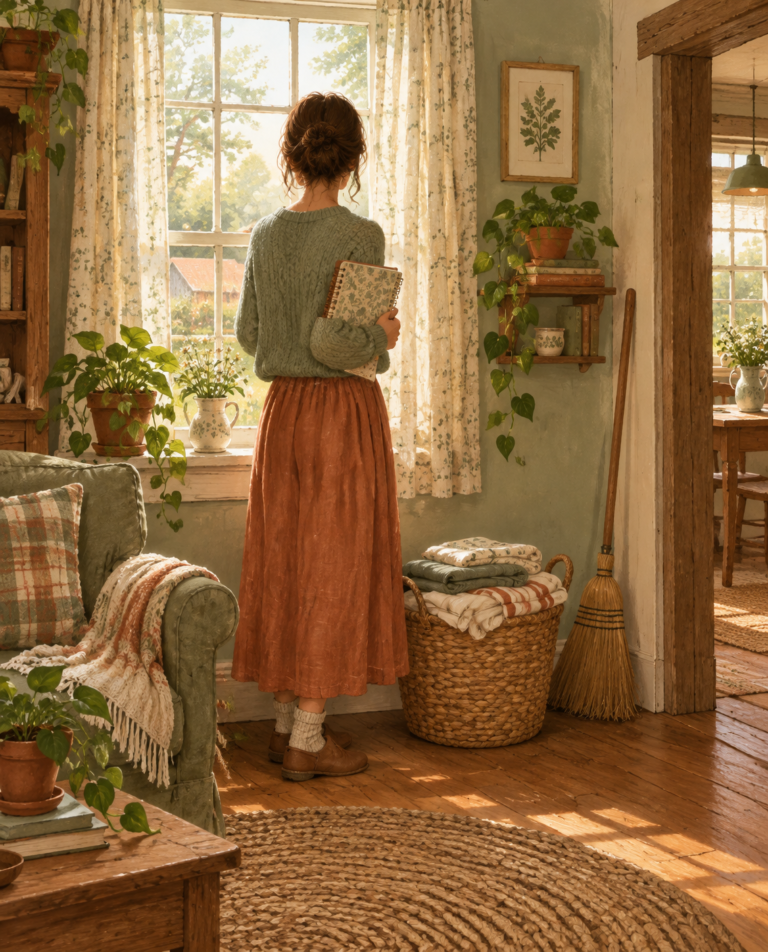 Household Zone Planner Pick your daily minutes and areas, and get a five-day plan of small tasks with a day of rest.
Keep reading
Related Blog Posts
 HomemakingFaith at Home
How to Create a Christ-Centered Home Without Overcomplicating It
Learn how to build a Christ-centered home through simple rhythms of God’s Word, prayer, worship, discipleship, and everyday faithfulness.
 Christian LivingFamily Life
Speaking Life Over Your Family: Biblical Principles for Praising Your Husband and Kids
Learn biblical principles for speaking life over your family, using words that encourage your husband and children toward love, faith, and growth.
 HomemakingRoutines
Stop Reading Proverbs 31 Like a To-Do List
Proverbs 31 isn’t a checklist to earn God’s approval. Discover what this poem truly teaches homemakers about grace, wisdom, and identity in Christ.