
Mom Rage: What God's Word Really Says About Anger in Motherhood
MOTHERHOODCHRISTIAN LIVINGFAMILY LIFEPARENTING
Regina
12/26/202522 min read
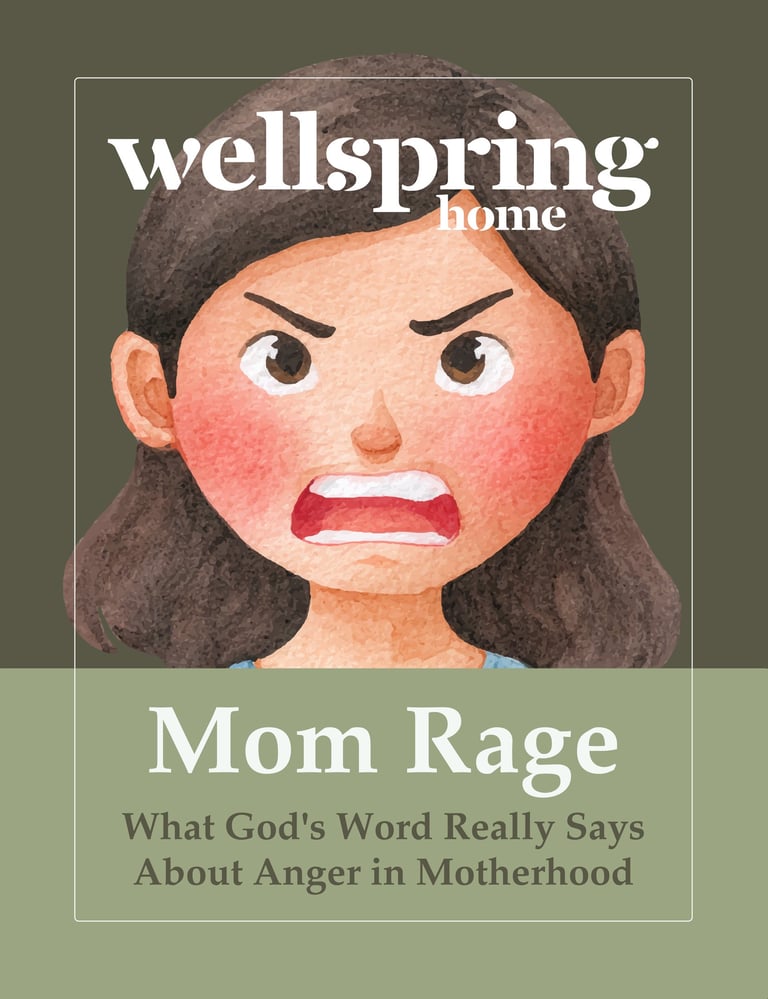
Mom rage often arrives without warning. One small act of disobedience, another spill, or one more ignored instruction, and suddenly the patience you vowed to show disappears. If you’ve felt this, you are not alone. Anger is a common struggle among mothers, including Christian mothers who sincerely desire to honor God in their parenting.
The Scripture does not treat anger lightly, nor does it dismiss it as mere exhaustion or temperament. God’s Word acknowledges that anger itself is not always sinful—“Be angry and do not sin” (Ephesians 4:26). Yet the Bible also draws a sharp distinction between righteous anger and the kind that flows from self-centered desires. “The anger of man does not produce the righteousness of God” (James 1:20). When harsh words erupt because our children interrupt our plans, challenge our authority, or fail to meet our expectations, the issue runs deeper than a difficult day. It reveals the condition of the heart.
Mom rage is not simply a parenting flaw. It is a manifestation of indwelling sin. Our anger often exposes misplaced loves: a desire for control, comfort, or order that has quietly taken God’s place. This truth is sobering, but it is also freeing. Naming sin for what it is allows us to bring it honestly before the Lord rather than excusing it or drowning in shame.
The hope of biblical motherhood is not found in self-control alone but in the character of God Himself. “The LORD is gracious and merciful, slow to anger and abounding in steadfast love” (Psalm 145:8). The same God who commands holiness also supplies mercy and grace for repentance and growth. When mom rage leaves you burdened with regret, the Bible invites you to run toward God, not hide from Him. Sanctification is not instantaneous, but the Holy Spirit faithfully works in us, shaping our responses over time.
Freedom from destructive anger in motherhood comes through daily dependence on Christ. As we submit our hearts to God’s Word and rely on the Holy Spirit, God cultivates patience, gentleness, and self-control. This is a fruit that flows not from our strength, but from His grace at work within us.
Understanding Mom Rage Through a Biblical Lens
The intense anger many mothers experience cannot be reduced to “just a bad day.” Biblical motherhood takes these emotions seriously, not to excuse them, but to examine them in the light of God’s truth. The Scripture does not deny the weight of motherhood in a fallen world; instead, it offers God’s perspective on why these emotions arise and how they must be addressed.
Defining Mom Anger in Biblical Motherhood
Mom rage often appears as sudden, overwhelming frustration that feels fierce, quickly ignited, and difficult to shake. Common contributors—sleep deprivation, emotional exhaustion, unmet expectations, or feelings of inadequacy—can intensify this struggle. Many Christian mothers are confused and discouraged by the strength of these reactions, wondering why they persist despite sincere faith.
While external pressures are real, the Bible calls us to look deeper than circumstances alone. Reactive parenting, often fueled by anger, is instinctive and unthinking, frequently followed by regret. In contrast, responsive parenting reflects biblical wisdom. It pauses, discerns, and responds in a way shaped by truth rather than impulse. God’s Word calls mothers not merely to manage behavior, but to shepherd the heart, both their children’s and their own.
Understanding anger within the framework of a fallen world offers both realism and hope. The Bible acknowledges difficult emotions and provides wisdom to handle them in ways that honor God and cultivate peace within the home.
Anger as a Heart Issue, Not Merely a Stress Response
While stress and fatigue may expose anger, the Scripture teaches that anger ultimately flows from within. Jesus makes this clear: “What comes out of the mouth proceeds from the heart” (Matthew 15:18). Others may provoke us, but they do not cause our sin; our responses reveal what is already present in our hearts.
Anger often functions as a secondary emotion, signaling deeper heart issues such as fear, disappointment, wounded pride, or a longing for control or affirmation. Mom rage exposes the reality of indwelling sin. It reveals disordered loves when comfort, efficiency, control, or personal expectations quietly take precedence over trust in God’s sovereignty.
Common heart struggles that mom rage may uncover include:
Pride that demands life follow our plans
Selfishness that prioritizes personal comfort over faithful love
A desire for control that exceeds our God-given authority
Recognizing these heart issues is not meant to condemn, but to lead us to repentance and renewal through Christ.
Righteous Anger vs. Sinful Anger
The Scripture makes an important distinction: not all anger is sinful. Righteous anger is directed toward genuine sin, not personal inconvenience. It is God-centered rather than self-centered, expressed with restraint, and aimed at restoration rather than retaliation.
Jesus Himself displayed righteous anger when God’s holiness was profaned, and others were harmed (John 2:13–17). When our hearts are stirred by what dishonors God or damages those entrusted to our care, that concern can reflect His character.
Sinful anger, however, emerges when our personal priorities are threatened or when anger becomes a tool for control. It often blends legitimate concerns with selfish motives, such as addressing a child’s disobedience while being more concerned about embarrassment, inconvenience, or loss of authority than the child’s heart.
What James Teaches Mothers
“For the anger of man does not produce the righteousness of God.” (James 1:20)
This verse offers crucial clarity for mothers struggling with rage. James reminds us that impulsive, uncontrolled anger, even when provoked by real disobedience, cannot accomplish God’s righteous purposes. Explosive reactions may secure short-term compliance, but they do not cultivate godliness in our children or holiness in ourselves.
God’s character stands in sharp contrast to human rage. “The LORD is gracious and merciful, slow to anger and abounding in steadfast love” (Psalm 145:8). While mothers may feel justified in their anger toward disrespect or rebellion, the Bible teaches that harsh words and unrestrained reactions fail to reflect God’s patience or produce the fruit we desire.
Biblical motherhood does not deny the presence of anger, but it calls us to submit it to God’s Word and to trust that His Spirit can transform even our most difficult emotions into instruments of grace, growth, and godliness.
Why Overstimulation Makes Anger Surface
Have you noticed how even the most patient mother can unravel after hours of relentless noise, mess, and constant demands? The connection between overstimulation and mom rage is not accidental. It reveals something about how God designed us as embodied creatures, and what happens when we live as though our limits do not matter.
The Root of Anger: A Heart That Seeks Control
Mom rage often emerges when chaos collides with a desire for control. In the pressure of daily motherhood, many women slip into survival mode and begin to treat constant strain as normal. Over time, the body remains locked in a state of alert, always bracing, always reacting. Rest no longer feels natural, and peace feels unreachable.
At the heart of this struggle is a longing for order and relief. Wanting a calm breakfast, obedient children, or even a few uninterrupted minutes is not sinful in itself. These desires reflect good and proper longings. But when those longings turn into demands, when peace must happen on our terms, anger flares as control slips away.
In those moments, the anger is rarely about the spilled milk or the noise itself. It is about another reminder that we are not in control of our circumstances, our children, or our day. What feels like a small disruption exposes a deeper fear of helplessness in a world that feels perpetually overwhelming.
The Body and Soul Under Constant Pressure
The Scripture affirms that we are not merely souls housed in bodies; we are whole persons, body and soul, created by God. When a mother lives under constant sensory input, both are affected.
Daily overstimulation often includes:
Visual overload from clutter, unfinished tasks, and constant motion
Competing sounds from children, devices, and household demands
Continuous physical touch that leaves a mother feeling depleted
Mental strain from carrying endless responsibilities and decisions
This barrage keeps the body’s stress response activated. Without adequate rest, stress hormones remain elevated, and emotional regulation becomes increasingly difficult. Exhaustion lowers resilience. What might have been manageable on a rested day becomes overwhelming when sleep-deprived.
While the Bible, not science, is our ultimate authority, these realities align with biblical wisdom. God created the human body with rhythms and limits. Ignoring them does not lead to holiness. It leads to frustration and anger.
God’s Design for Limits, Rest, and Dependence
God never intended mothers to function as inexhaustible sources of strength. From the beginning, creation itself teaches us about limits—day and night, work and rest. These rhythms are not burdens; they are gifts.
Our limits remind us that we are not God. We are not all-knowing, all-present, or all-sufficient. Limited energy, patience, and capacity are not design flaws. They are part of God’s wise creation, meant to lead us into dependence on Him.
Feeling overwhelmed is not evidence of failure; it is evidence of humanity. The problem arises when we respond to our limits with anxious striving rather than humble trust. In God’s economy, rest is not weakness. It is faith expressed in action.
The Gift of Rest
“It is in vain that you rise up early and go late to rest, eating the bread of anxious toil; for he gives to his beloved sleep.” (Psalm 127:2)
This verse confronts the belief that more effort, longer hours, or constant vigilance will secure peace or success. The Bible calls such striving “vain.” It is empty and ineffective apart from God’s sustaining care.
Sleep is not an indulgence; it is a declaration of trust. Going to bed with unfinished tasks is an act of faith that acknowledges God’s sovereignty. It says, “The Lord is at work even when I am not.” Embracing rest becomes an act of worship, reminding us that faithful motherhood is not upheld by endless exertion, but by the gracious provision of a faithful God.
When we accept our limits and rest in Him, overstimulation loses its grip, and anger no longer needs to rule the heart.
God's Compassion for the Weary Mother
Motherhood often brings emotional weight that feels relentless. There are moments of joy interwoven with exhaustion, discouragement, and unseen sacrifice. Yet the Scripture reveals a steady and beautiful truth: God regards weary mothers with deep compassion. While the world may minimize a mother’s labor or misunderstand her struggles, our Heavenly Father sees fully, knows intimately, and responds with mercy.
Christ’s Gentleness Toward the Burdened
Jesus extends a gracious invitation to the exhausted and overwhelmed. His call is not reserved for those who have mastered self-control or reached emotional stability. He speaks directly to those who are worn down by the weight of daily responsibilities: “Come to me, all who labor and are heavy laden.” There are no prerequisites, no demand that you first calm yourself, fix your emotions, or present a polished version of motherhood. Christ invites you as you are, burden and all.
This invitation flows from Christ’s mediatorial work. Because He has already borne the full weight of our sin and condemnation, He now welcomes His people with tenderness rather than judgment. When Jesus declares, “I am gentle and lowly in heart,” He reveals not only His disposition but His sufficiency. Where others may criticize your struggles or measure your worth by performance, Christ meets you with gentleness that acknowledges your weakness and provides refuge for your soul.
God Sees the Unseen Labor of Motherhood
Much of a mother’s work happens in quiet, unnoticed spaces—laundry folded again, meals prepared and cleared away, emotional needs met, and nights interrupted for comfort and care. The Bible assures us that none of this labor is invisible to God.
In Genesis 16:13, Hagar names the Lord El Roi—“the God who sees.” This truth extends to every weary mother who feels overlooked or unappreciated. “For the eyes of the Lord are on the righteous, and His ears are open to their prayer” (1 Peter 3:12). God’s attentive gaze brings comfort in seasons where faithfulness feels thankless. He sees not only what you do, but the love, sacrifice, and perseverance behind it.
Emotions Are Not Sinful, But Must Be Submitted to God
The Scripture does not condemn emotion itself. Feelings such as anger, frustration, or overwhelm are not automatically sinful; they are part of our created humanity and often serve as indicators of deeper heart realities. The issue is not the presence of emotion, but the direction we take with it.
Rather than suppressing or denying difficult feelings, God invites us to bring them honestly before Him. Unaddressed emotions often resurface in destructive ways, but submitted emotions become opportunities for sanctification. God uses His Word and Spirit to guide our responses, teaching us to process what we feel in ways that honor Him and restore peace.
How the Gospel Transforms Our Reactions
The gospel reshapes how we respond in the most triggering moments of motherhood. In Christ, you are fully known and fully loved—justified, forgiven, and secure. This truth dismantles the pressure to prove yourself through perfect parenting or emotional control.
Jesus does not merely sympathize with your burdens; He offers to carry them. The weight you bear as a mother—the constant responsibility, emotional strain, and sense of inadequacy—is not meant to rest on your shoulders alone. Christ invites you to exchange your crushing load for His sustaining care. His yoke is “easy,” not because motherhood becomes effortless, but because He supplies the strength you lack.
“Come to me, all who labor and are heavy laden, and I will give you rest. Take my yoke upon you, and learn from me, for I am gentle and lowly in heart, and you will find rest for your souls. For my yoke is easy, and my burden is light.” (Matthew 11:28–30)
This promise speaks directly to the weary mother’s heart. Jesus offers more than temporary relief. He offers soul-deep rest. He does not call you to strive harder, but to learn from Him. As you submit your burdens to Christ and walk in dependence on His grace, He gives what motherhood alone cannot: true rest, lasting peace, and strength sustained by His unfailing love.
Replacing Explosive Reactions With Spirit-Led Responses
The battle against mom rage cannot be won through sheer determination. The Scripture is clear that lasting change does not come from a stronger resolve, but from spiritual transformation. Reactive parenting is not overcome by willpower alone; it requires the indwelling and active work of the Holy Spirit. God does not merely command self-control. He supplies the power to grow in it.
Walking by the Spirit, Not the Flesh
The Apostle Paul contrasts two ways of living: walking by the flesh or walking by the Spirit (Galatians 5:16). While this language may seem distant from the noise, mess, and stress of everyday motherhood, it speaks directly to those moments when anger rises without warning.
When you walk by the flesh, frustration demands immediate expression. The impulse is to react, to release pressure through sharp words or raised voices. Walking by the Spirit, however, creates space between trigger and response. The Spirit brings truth to mind, restrains sinful impulses, and redirects the heart toward Christ-honoring action.
Spiritual disciplines, such as prayer, Scripture meditation, and reflective journaling, are not empty routines. These are means of grace through which God shapes His people. As you commune with God before pressure builds, the Holy Spirit uses these practices to steady your heart, renew your mind, and prepare you for inevitable challenges. Over time, this spiritual grounding also supports emotional regulation and helps your responses reflect wisdom rather than impulse.
When anger flares, a real choice presents itself. The flesh urges immediate release; the Spirit offers a better way. Spirit-led motherhood means learning to pause, pray, and respond thoughtfully rather than reacting instinctively and later regretting it.
Practical expressions of walking by the Spirit include:
Cultivating daily communion with God before moments of stress arise
Prayerfully identifying common triggers and preparing godly responses
Living in a Christian community where encouragement and accountability strengthen obedience
Cultivating Self-Control as Fruit, Not Willpower
Biblical self-control is not the product of gritted teeth or sheer discipline. It is the fruit of God’s grace at work within a believer. Before conversion, even our best efforts could not please God. But in Christ, the Holy Spirit empowers genuine obedience that flows from a renewed heart.
Self-control is the Spirit-enabled ability to restrain the desires of the flesh—the impulses that seek comfort, escape, or control at the expense of love and faithfulness. It does not deny exhaustion or longing for rest, but it submits those desires to God’s will.
In everyday motherhood, self-control often looks ordinary:
Speaking words that give life rather than venting frustration
Choosing patient mediation over withdrawal when children conflict
Faithfully meeting small, repetitive needs with quiet perseverance
These acts may appear ordinary, but they are deeply spiritual. Self-control grows through intentional dependence on God—planning ahead, asking for help, and prayerfully addressing known weaknesses. Far from diminishing spirituality, such preparation displays a life ordered by faith.
The Fruit of the Spirit at Work
“But the fruit of the Spirit is love, joy, peace, patience, kindness, goodness, faithfulness, gentleness, self-control; against such things there is no law.” (Galatians 5:22–23)
Paul reminds us that fruit is produced, not manufactured. A healthy tree bears fruit because it is alive and nourished at the root. In the same way, self-control grows naturally from a life rooted in Christ and sustained by His Spirit.
Paul continues, “If we live by the Spirit, let us also keep in step with the Spirit” (Galatians 5:25). Keeping in step means yielding our moment-by-moment choices to the Spirit’s leading and choosing obedience over impulse, faith over fear, and grace over rage. Over time, Spirit-led responses replace explosive reactions, not because motherhood becomes easier, but because God is faithfully at work within you.
Learning to Pause Before Reacting
In the ordinary pressures of motherhood, a single moment can change the direction of a conversation, a discipline moment, or even the tone of an entire day. That brief pause between trigger and response—when emotions surge, and words rush forward—may be one of the most spiritually significant moments in your daily life. The Scripture teaches that restraint in such moments is not passive; it is an active expression of wisdom and faith.
Biblical Wisdom in Slowness and Restraint
God’s Word consistently presents slowness to anger as a mark of wisdom. This kind of restraint is not mere emotional suppression, but the fruit of understanding shaped by truth. Solomon warns, “Be not quick in your spirit to become angry, for anger lodges in the heart of fools” (Ecclesiastes 7:9). The Scripture does not condemn emotion, but it cautions against a heart that gives anger a permanent home.
Proverbs deepens this insight: “A person’s wisdom yields patience; it is to one’s glory to overlook an offense” (Proverbs 19:11). Here, patience flows from discernment, not from personality or sheer effort. The ability to overlook offenses, especially the small and frequent ones of childhood, is presented as honorable and beautiful. For God, restraint is strength, and forgiveness is glory.
The turning point lies in the space between what provokes us and how we respond. Creating that space allows God’s truth, not raw emotion, to govern our actions. This pause interrupts the reflex of the flesh and opens the door for Spirit-led wisdom.
The Power of Silence and Prayer in Heated Moments
Silence, when guided by humility, becomes a powerful ally against reactive parenting. The Bible reminds us, “Even a fool who keeps silent is considered wise; when he closes his lips, he is deemed intelligent” (Proverbs 17:28). In moments of rising anger, withholding words can preserve peace until wisdom takes root.
Prayer within that pause does not need to be lengthy or eloquent. A simple plea—“Lord, help me respond with wisdom”—is sufficient to reorient the heart toward God. Prayer is not a last resort; it is a means of grace through which God actively strengthens His people in real time.
Many mothers find it helpful to use intentional frameworks that guide their pause toward godly action. One such approach can be summarized as P.A.U.S.E.:
Pray for wisdom, gentleness, and self-control.
Assess what is happening in your heart and in your child.
Understand that your ultimate aim is to glorify God, not to regain control.
Sympathize with your child’s needs, fears, or frustrations.
Engage calmly and deliberately, reflecting Christlike care.
Physical nearness often reinforces this posture of peace. Lowering yourself to your child’s level, softening your voice, or offering a gentle touch can shift the emotional atmosphere for both of you. These small acts of connection often defuse tension and open the way for meaningful correction.
Wisdom That Makes Room for Grace
“A person’s wisdom yields patience; it is to one’s glory to overlook an offense.” (Proverbs 19:11)
This verse reveals two transformative truths for motherhood. First, patience is born from wisdom shaped by God’s Word, not from natural temperament or human resolve. Second, choosing to overlook offenses—especially minor, immature, or unintentional ones—is not defeat, but glory.
When you pause before reacting, you create a space for the Holy Spirit to work. In that space, anger is no longer in control, and grace has room to grow. God uses these moments, often quiet and unseen, to form patience, deepen love, and transform potential outbursts into opportunities for gospel-shaped parenting.
When You've Already Lost Your Temper
The aftermath of anger can feel heavy. Harsh words linger, relationships feel strained, and regret settles in. These moments are painful, but the Scripture does not leave weary mothers trapped in shame. God provides a clear and gracious path forward that leads not to despair, but to healing, restoration, and spiritual growth.
Confession and Repentance Without Shame
When a mother loses her temper, God calls her to honest acknowledgment. The Scripture does not minimize sinful anger as a mere “bad day” or personality flaw. It names it truthfully as sin, not to crush us, but to free us. Facing that reality is the first step toward genuine change.
Confession is not a desperate attempt to earn forgiveness; it is a response to grace already secured in Christ. Many mothers suffer silently, believing they are alone in their struggle, while others appear composed and self-controlled. This isolation deepens shame and hinders repentance. Yet bringing sin into the light—before God and, when appropriate, before others—opens the door to healing.
Anger itself is not inherently sinful; God created emotion as part of our humanity. Sin enters when anger is expressed through harshness, control, or self-centered demands. When that happens, the gospel invites us to confess, turn from sin, and rest in Christ’s finished work rather than wallow in guilt.
Repairing Relationships Through Humility
Repentance does not end with private confession to God; it bears fruit in restored relationships. Humility toward our children is a powerful testimony of the gospel at work. This often includes:
Confessing sin to them in age-appropriate language
Asking directly for their forgiveness, not excusing behavior or shifting blame
Reassuring them of your commitment to grow in self-control by God’s grace
Children do not need perfect parents. They need repentant ones. When they witness genuine humility, they learn what grace, forgiveness, and responsibility look like in everyday life. Far from weakening parental authority, repentance strengthens trust and deepens relational security.
God also uses Christian communities as a means of grace. When others can see our lives honestly, including our struggles, we gain accountability and encouragement. If anger disappears in public but erupts in private, it may signal a need for greater transparency and support within the body of Christ.
The Hope of Full Forgiveness
“If we confess our sins, he is faithful and just to forgive us our sins and to cleanse us from all unrighteousness.” (1 John 1:9)
This promise offers hope in the wake of mom rage. God does not merely forgive; He cleanses. His faithfulness rests not on your performance as a mother, but on His unchanging character and Christ’s completed atonement.
Through confession and repentance, God heals both the guilty heart and the fractured relationship. Change may come gradually, as sanctification always does, but it is real. Over time, your husband and children will see evidence of God’s grace shaping your responses, softening your heart, and producing a renewed desire to walk in obedience.
Shame says, “You’ve failed.” The gospel says, “You are forgiven. Now walk in freedom.”
Teaching Children Through Repentance and Repair
Some of the most formative discipleship moments in your home will not come from your strengths, but from your failures. When a mother loses her temper and then returns in humility, she offers her children a living picture of the gospel at work. These moments of repair transform ordinary parenting mistakes into opportunities for spiritual formation.
Modeling the Gospel in Everyday Failures
A mother’s repentance teaches her children far more than flawless behavior ever could. Christianity is not lived out in ideal conditions, but in the messiness of real life. When you acknowledge sin honestly, without excuses or defensiveness, you show your children what it means to live under grace.
Rather than minimizing your wrongdoing or waiting for emotions to settle without addressing the issue, confession demonstrates that believers take sin seriously because they take grace seriously. Even when a conflict feels largely justified, owning your portion of sin, however small, models integrity and gospel clarity. Children learn that repentance is not about winning arguments, but about honoring God.
Your children do not need a mother who never fails. They need one who knows how to return to Christ, receive forgiveness, and extend it freely.
Modeling Humility and Grace
True humility is expressed not merely in apology, but in repentance. Saying, “Will you forgive me?” teaches children that forgiveness is relational and restorative, not assumed or demanded. This kind of language removes self-protection and places trust in grace.
Practical ways to model authentic repentance include:
Naming specifically what you did wrong
Taking full responsibility without blame-shifting or justification
Asking directly for forgiveness
Reaffirming your love regardless of how quickly forgiveness is offered
These moments shape a child’s understanding of accountability, mercy, and love. They learn that sin does not end relationships when met with repentance, and that forgiveness is both costly and beautiful.
Showing Children the Gospel in Action
Each sincere act of repair communicates a vital truth: no one in the family is sinless, not parents and not children. Yet love remains steadfast because it is grounded in Christ, not performance. Through these interactions, children see that God delights to work through imperfect people.
The Bible reminds us that God’s “power is made perfect in weakness” (2 Corinthians 12:9). In His wisdom, He uses even our failures to magnify His grace. When children witness repentance followed by restoration, they see the gospel not merely taught, but embodied.
Forgiveness as a Way of Life
“Bear with one another and, if one has a complaint against another, forgive each other; as the Lord has forgiven you, so you also must forgive.” (Colossians 3:13)
This command shapes the culture of a Christian home. Forgiveness is not optional. It is foundational. As parents extend forgiveness to their children and seek it from them, they teach what it means to live under the mercy of Christ.
In this way, everyday repentance becomes discipleship. Through confession, forgiveness, and repair, God forms hearts, yours and your children’s, according to the pattern of the gospel.
Building Rhythms That Reduce Overwhelm
Order in motherhood is not the enemy of joy. It is often the means by which peace is preserved. Intentional rhythms do not eliminate spontaneity; they create stability in which it can flourish. For overwhelmed mothers, wise structure provides a framework that supports emotional steadiness, spiritual attentiveness, and faithful care of the home.
Ordering the Home and Schedule with Wisdom
Time is a finite gift from God, entrusted to us for faithful stewardship. While motherhood is full of interruptions and unpredictability, having a loose but purposeful plan helps guard against constant reactivity. A flexible schedule prioritizes what matters most without demanding perfection.
The Scripture commends thoughtful diligence. The Proverbs 31 woman models wisdom in the ordering of her life—balancing care for her household, productive work, and attention to her family with discernment and joy. Her example does not promote busyness for its own sake, but intentionality that strengthens the home and honors the Lord. When tasks are approached with wisdom rather than urgency, time becomes a servant instead of a tyrant.
Creating Routines Rooted in the Bible
God’s Word provides a foundation for shaping daily rhythms that nurture both faith and family life. The Scripture calls parents to integrate spiritual formation into the ordinary flow of the day:
Deuteronomy 6:5–7 instructs parents to impress God’s commands on their children through everyday moments at home, on the way, at bedtime, and upon rising.
Ecclesiastes reminds us that joy is found in receiving our daily work as a gift from God, even when the tasks feel repetitive or unseen (Ecclesiastes 3:12).
When the Scripture shapes routine, the home becomes a place of ongoing discipleship rather than sporadic instruction. Even brief, consistent habits, such as a short time in God’s Word each day, anchor the heart in truth and bring spiritual steadiness amid the noise of motherhood.
Small Habits That Support Emotional Regulation
Faithful rhythms also support emotional health, recognizing that we are embodied souls. God cares about both spiritual devotion and physical well-being.
Helpful practices often include:
Prioritizing basic physical care—adequate sleep, nourishing meals, and regular movement—since exhaustion weakens patience and intensifies anger.
Maintaining order in the home as an act of stewardship; physical clutter often increases mental strain and emotional fatigue.
Participating in Christian community through prayer groups or Bible studies, where burdens can be shared and encouragement received before frustration hardens into resentment.
These habits are not merely practical; they are spiritual acts of dependence that acknowledge God’s design for human limits and communal support.
Living in Seasoned Trust
“For everything there is a season, and a time for every matter under heaven.” (Ecclesiastes 3:1)
This truth calls mothers to embrace the season they are in without resentment or despair. Each stage of motherhood carries unique challenges and graces, all appointed by God for His purposes. Chaos with young children, emotional demands, and interrupted plans are not signs of failure. They are features of the season God has assigned.
Peace grows as mothers receive their current season as a gift, trusting that God is at work within it. The demanding moments will not last forever, but the fruit of faithful obedience, shaped through daily rhythms and humble dependence, will endure.
Depending on God
Motherhood was never meant to be a display of flawless parenting. It is a God-ordained means of drawing you into deeper dependence on Him. Through your limitations, frustrations, and failures, the Lord is not exposing you to shame. He is inviting you into transformation.
Sanctification as a Process, Not Instant Change
Motherhood has a unique way of revealing what lies beneath the surface of the heart. Pressures you never anticipated bring hidden sins, fears, and desires into the light. While this exposure can be uncomfortable, it is not purposeless. In His wisdom, God uses the ordinary struggles of parenting as instruments of sanctification, not to make life easier, but to make His people holy.
The Scripture reminds us that transformation is gradual. We are being changed “from one degree of glory to another” (2 Corinthians 3:18). Sanctification in motherhood is rarely dramatic or immediate. It unfolds slowly through daily repentance, repeated dependence, and renewed faith. Each challenging moment becomes an opportunity for the Spirit to expose sin and replace it with a deeper love for Christ.
God’s Strength Made Perfect in Weakness
The pursuit of perfect parenting places an unbearable weight on both mothers and children. God offers a radically different way. He does not call you to perfection, but to trust. He allows weakness, not to harm you, but to show you where true strength is found.
Every sleepless night, public meltdown, and moments of lost patience remind you that you were never meant to carry motherhood on your own. God meets you precisely where you feel most inadequate. “My grace is sufficient for you, for my power is made perfect in weakness” (2 Corinthians 12:9). The Lord does not remove every struggle, but He supplies sustaining grace through them. His power shines most clearly where your strength runs out.
Living Out the Gospel in Daily Motherhood
God’s Word equips you for godliness in the midst of emotional intensity. Anger itself is not sin, but the Bible teaches us to steward our responses with wisdom and self-control. When rage threatens to overtake your parenting, God’s Word becomes an anchor. Memorizing God’s Word, pausing before responding, and praying simple prayers of dependence allow the Holy Spirit to guide your words rather than your impulses.
Even your failures are not wasted. When met with humble repentance, they become powerful discipleship moments. As you confess sin, ask forgiveness without excuses, and pursue reconciliation, your children see the gospel embodied. These moments of repair often cultivate deeper trust and connection than perfection ever could.
God also uses wise structure and rhythms to reduce overwhelm. Faithful stewardship of time and responsibilities glorifies God and strengthens the home, even as flexibility remains necessary. “She watches over the affairs of her household and does not eat the bread of idleness” (Proverbs 31:27). Order serves peace, not pressure.
Motherhood was never designed to showcase your competence, but your reliance on God. The Scripture invites you to cast every burden upon the Lord, trusting His sustaining care. “Cast your burden on the LORD, and he will sustain you” (Psalm 55:22). Each demanding day is an invitation to lean more fully into His grace.
The struggle against anger does not disqualify you from God’s calling. It draws you closer to the Savior you need daily. God is faithful to complete what He has begun. “He who began a good work in you will bring it to completion at the day of Jesus Christ” (Philippians 1:6). This promise does not stand in spite of your motherhood struggles; it shines through them.
As God works patiently through this sanctifying journey, He is shaping you into the image of Christ one moment, one repentance, and one act of dependence at a time.
Subscribe to my newsletter for holistic homemaking tips and faith-filled inspiration for your home, your family, and your own personal walk in faith.
Join My Newsletter
© Copyright The Focused Homemaker, 2026. All Rights Reserved.
The Focused Homemaker
Encouragement for the wife, mother, and homemaker you actually are, one pillar at a time.